
Self-Pay Is Up. Here’s What NMHS Is Doing About It
- Webinar
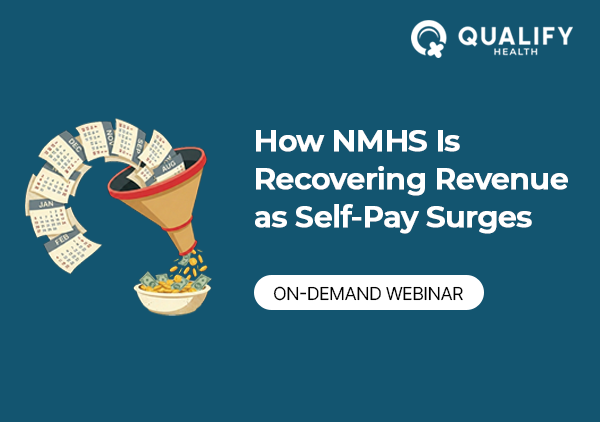
Mississippi is one of the hardest-hit states in the country under the One Big Beautiful Bill Act. Medicaid eligibility is tightening, retroactive coverage is restricted, ACA enhanced subsidies are gone, and state-directed payments sunset in 2028 all landing on a non-expansion state where 60% of hospitals already run negative margins and statewide uncompensated care exceeds $600 million a year.
At North Mississippi Health Services, self-pay is up. Rather than absorb the hit, the NMHS team leverage Qualify Health’s retroactive/look-back capability into the core of their revenue cycle, surfacing eligibility that upfront screening misses, and converting accounts that would otherwise become bad debt into resolved, funded care.

In this webinar, you’ll hear directly from the three leaders making it work:
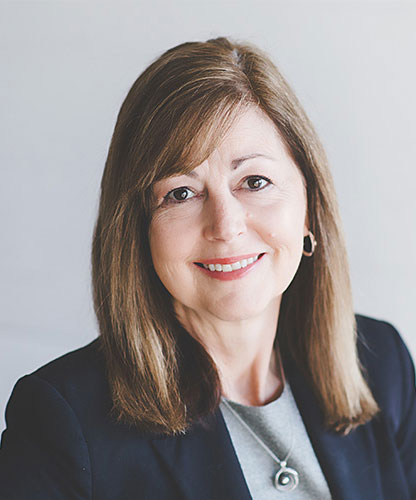
Sharon Nobles, CFO — on the financial picture, the strategic levers she's pulling on self-pay
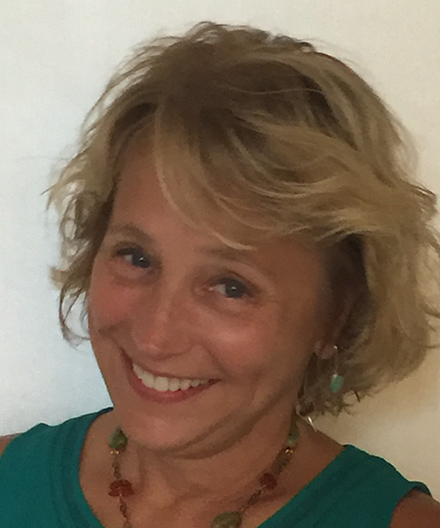
Carol Plato, VP of Revenue Cycle — on where look-back fits in the broader revenue cycle strategy
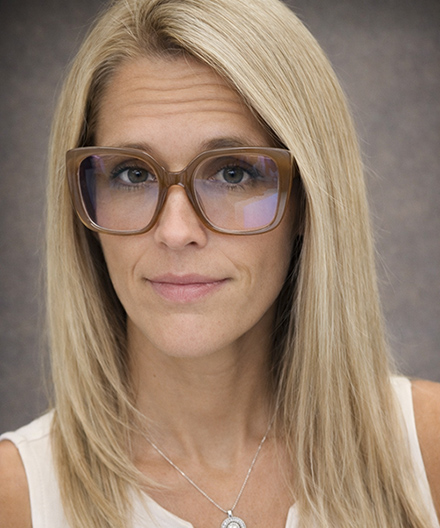
Heidi Kennedy, Director of the Single Business Office — on the technical mechanics other organizations underestimate
North Mississippi Health Services
CFO
Before joining NMHS in 2017, Sharon worked with Baptist Health Care Corporation in Pensacola, Fla. She served as vice president and chief financial officer for Acute Care Services and led all aspects of financial operations for three acute care hospitals and two joint venture ambulatory surgery centers. During her 23-year tenure with Baptist, she served in various financial leadership roles, including system CFO for two years.
A graduate of the University of West Florida, she is a certified public accountant, designated as a certified treasury professional with the Association for Financial Professionals and a member of the Healthcare Financial Management Association.
North Mississippi Health Services
VP of Revenue Cycle
Carol is an experienced Revenue Cycle Leader with strong team building, strategic, innovative and organizational skills. She has a proven record of accomplishment with an extensive background in leading operations and managing projects. She serves as a dedicated change agent for improvement, as well as securing long-term corporate success and profitability.
Carol started at NMHS in 2019 and helped complete a revenue cycle turnaround while converting to EPIC PB and HB. Prior to NMHS, Carol was Assistant VP at Martin Health System for 25 years.
Carol earned an MBA from Nova Southeastern University and a B.Sci.in Health Care Financial Management from Northeastern University. She is a Certified Healthcare Financial Professional (CHFP) from Healthcare Financial Management Association (HFMA) and is current Fellow of HFMA.
North Mississippi Health Services
Director of The Single Business Office
Heidi provides strategic and operational leadership across revenue cycle functions with a focus on efficiency, accuracy, and a positive patient financial experience. She brings extensive system-level experience, including prior leadership in Patient Access, giving her a comprehensive view of the end‑to‑end revenue cycle and its interdependencies.
Known for her collaborative leadership style, Heidi has led transformative initiatives that strengthen processes, improve performance, and support both frontline and backend teams. She is passionate about developing high‑performing teams, using data to drive decision‑making, and partnering across the organization to deliver sustainable operational and financial results.
About North Mississippi Health Services: NMHS is a fully integrated, not-for-profit health system based in Tupelo, serving a 24-county region across north Mississippi and northwest Alabama. Eight hospitals, more than 120 locations, and 7,000-plus teammates, anchored in a mission to continuously improve the health of the people of their region.

A visionary healthcare entrepreneur and former Wall Street analyst, Monique transformed a pivotal life decision in 2012 into a remarkable success story.
After an illustrious career in finance, including roles at Wellington Management and Goldman Sachs, she acquired and revolutionized a healthcare consulting practice. Her company now leads in specialty pharmacy advisory services, digital healthcare, and oncology support services.
With over 20 years of healthcare expertise, an MBA from Dartmouth’s Tuck School of Business, and a CFA designation, this Sydney native exemplifies how strategic career pivots can create both professional success and personal fulfillment.
[00:00:06] Monique Lappas (Moderator): Hi, everybody! Welcome, and thank you for joining us today. I am Monique Lappas, the CEO of Qualify Health.
[00:00:14] Monique Lappas: Just some really quick information about who we are. Qualify Health partners with health systems to automate the identification and securing of philanthropic financial assistance for patients before or after the point of service. So we are here today to talk about our retroactive, or as I like to call it, our safety net capabilities, which surfaces eligibility that traditional upfront screening misses, helping to convert accounts that would otherwise become bad debt or uncompensated charity into resolved and funded care.
[00:00:45] Monique Lappas: We work with hospitals across the country, and today’s conversation is one that we have really wanted to host for a long time, because the team at North Mississippi Health Services, NMHS, has done something genuinely unique and instructive with this work, and they’ve done it in one of the highest uncompensated care burdens in the country.
[00:01:05] Monique Lappas: NMHS is a fully integrated, not-for-profit health system based in Tupelo, Mississippi, and serves 24 county regions across North Mississippi and Northwest Alabama. They have 8 hospitals in over 120 locations, 7,000-plus teammates, and a mission to continuously improve the health of the people in their region. They are anchored in their CARES values, which is compassion, accountability, respect, excellence, and, finally, smile.
[00:01:35] Monique Lappas: They have been a Qualify Health client and a real partner, and when I say that, it really is a true partnership in shaping how the safety net capability really works in practice. So, today, I am joined by three members of the NMHS leadership team who have been closest to the work that we’ve been doing there. Firstly, we have Sharon Nobles. Sharon is the CFO. Before joining NMHS in 2017, Sharon spent 23 years at Baptist Health in Pensacola, where she ultimately rose to the level of CFO for the acute care services, overseeing financial operations across 3 hospitals and 2 surgery centers. She is a CPA, a Certified Treasury Professional, and someone who has really seen the full arc of healthcare financial leadership.
[00:02:23] Monique Lappas: Then, we have Carol Plato, who’s part of the champion behind us starting to work at North Mississippi. Carol leads Revenue Cycle as their Vice President. She came to NMHS in 2019 and really helped to lead a true revenue cycle turnaround, while simultaneously converting to Epic, both PB and HB, which any of you know in the space, that is no small ask. And she did it in such style that she’s one of the top-ranked Epic conversions in the country.
[00:02:54] Monique Lappas: Before North Mississippi, Carol spent 25 years at Martin Health System, working her way to Assistant Vice President. She holds an MBA, a degree in healthcare financial management, and is a very active fellow in the HFMA.
[00:03:08] Monique Lappas: Okay, finally, we have Heidi Kennedy. Heidi is Carol’s right hand and Director of the Single Business Office. Heidi came up through Patient Access, which really gives her a genuinely end-to-end view of revenue cycle, from front door to back office. Heidi leads with data, she builds high-performing teams, and is the person at NMHS who knows exactly where operational complexity lives.
[00:03:34] Monique Lappas: Sharon, Carol, Heidi, thank you so much for joining us today. We are going to spend the next 30 minutes discussing what you’re doing, and we will leave time at the end for audience questions.
[00:03:45] Monique Lappas: So, we are going to start by setting some stage before we pass it over to the panel for questions. Mississippi is taking one of the hardest hits from the new OBBB legislation. The state has not expanded Medicaid, and existing eligibility is incredibly tight. Now, they are getting squeezed from all sides—retroactive coverage is restricted, the enhanced ACA subsidies ended at the end of last year, and looking ahead to 2028, more funding cuts are coming.
[00:04:15] Monique Lappas: All of this is crashing down on a state where many of the hospitals are on life support. Right now, 60% of Mississippi hospitals are losing money, and they’re eating over $600 million a year in uncompensated care. North Mississippi, with the help of these leaders on the call today, has been able to stand strong against a lot of these headwinds. So, let’s go to the panel and learn why.
[00:04:38] Monique Lappas: Sharon, I’m going to start with the panel. The One Big Beautiful Bill, or OBBB, is completely rewriting the rulebook. We’re looking at tighter Medicaid eligibility, new restrictions on retroactive coverage, reduced reimbursements, and looming cuts to state-directed payments in 2028. So maybe, if it’s okay, I’d love to hear from each of you on what your perspectives are on how that has changed the urgency and the economics of identifying assistance eligibility. Sharon, maybe we could start with you.
[00:05:10] Sharon Nobles: Yes, thank you, Monique, and thank you for inviting us to speak with you today. From the CFO chair, we’ve done a lot of work and effort to educate our board that with the expiration of the enhanced subsidies, we would expect that our self-pay percentage would continue to increase.
[00:05:32] Sharon Nobles: So as a result, we really have looked at our presumptive eligibility, making sure that we are taking advantage of that. We’ve also reviewed our charity policy to ensure that it’s contemporary to see if any changes were made. We do have assistance in making sure we’re qualifying our patients for Medicaid when that’s available.
[00:05:49] Sharon Nobles: And then one of the things that’s unique, I think, that North Miss is doing is we are partnering with other providers in our service area, really around FQHCs and other providers that are really focusing on providing care for the uninsured. And then finally, one of the tools in the toolkit is looking at vendors like Qualify to find out how can we find additional funding assistance, and find ways to help cover the care for the uninsured as we are seeing those increases.
[00:06:27] Monique Lappas: Great, thank you. Carol, what are some of the things that you have perspectives on around the urgency of what’s coming with OBBB?
[00:06:34] Carol Plato: I think Sharon touched on them already, but I just want to say that as a revenue cycle leader, OBBB is just one of the many changes that we’re constantly dealing with, because there’s state regulations, there’s payer regulations, and the patients are constantly getting their benefit plans changed. I think as a revenue cycle leader, we just need to stay on our toes and make sure that we are, of course, addressing everything that happens with OBBB, but who knows what the next administration will bring, and what changes will occur. So we just have to be continually ready to adapt.
[00:07:13] Monique Lappas: Yeah, you know, I used to do investment banking in healthcare, and we used to always say that with a stroke of a pen, your entire environment can change. Heidi, from the front end to the back end, what about you?
[00:07:28] Heidi Kennedy: Obviously, they both pretty much hit on the big points, but I think, to piggyback off that, just operationalizing those understandings where we’re having to stay current on all the changes and making sure we are able to communicate those to our patient population. Helping them understand the changes and the complexities in the best way that we can, so that we can work through all of the transitions together.
[00:07:50] Monique Lappas: That’s great. All right, Sharon, back to you. So, you’ve seen rising self-pay volume, you’ve got tightening Medicaid starting in 2027, we saw the end of the ACA subsidies in 2025, and now, with Mississippi already carrying an outsized uncompensated care burden, what is your view of the landscape, both at the hospital and the state right now, and what does it mean in dollars and decisions for systems like yours, particularly around how it helped to lead the decision to move forward with the safety net solution that you’re working with Qualify on?
[00:08:24] Sharon Nobles: Yeah, to set the landscape, the enhanced subsidies really came into play several years ago, and with the enhanced subsidies particularly, what we saw with our payer mix, we saw a decline in self-pay and an increase in the utilization of the exchange products. We’re seeing that reversing now. With the expiration of the enhanced subsidies at 12/31, what we’ve done is reach out to the broker community to see what enrollment looks like. How many people are enrolling in our primary and secondary service area? And no surprise, we’re seeing the enrollments decline pretty substantially, and we are seeing them come through our front door as measured by our payer mix.
[00:09:09] Sharon Nobles: So, what we’re doing is really keeping payer mix as a front and center topic as we address our board to understand what that shift looks like, not only as a percentage, but in dollars and cents. It will definitely be a headwind for this organization, on top of all the other reimbursement cuts potentially on the horizon, the One Big Beautiful Bill being one of those, in addition to an array of other things.
[00:09:33] Sharon Nobles: So, with that pressure on profitability, really saying, what are the tools that we can deploy, both at the front end and through the revenue cycle, to really be patient-center focused, to enable care, and to partner with companies such as Qualify to provide that safety net solution.
[00:09:55] Monique Lappas: And I know that we’ve got the enhanced subsidies that ended last year. Medicaid, we’re not really going to see the impact of that until 2027. Are there any levers that you’ve pulled that do really work, and are there any that you’ve tried or you’ve analyzed to think, well, you know what, I don’t think that’s going to work at this time?
[00:10:15] Sharon Nobles: Yeah, I touched on some of those at the beginning, but really, taking advantage of the presumptive eligibility and trying to get people qualified for Medicaid to have some payer source, and we’re really just at the tip of that coordination, oftentimes. When people lose their insurance, they wait and they delay the care. Partnering with these organizations, like FQHCs, to really make sure follow-ups and everything can be done, perhaps outside our four walls, that will help alleviate some of the financial pressure, while ensuring that our patients receive the care.
[00:10:54] Sharon Nobles: We continually look and are trying to find other opportunities. One of the things is, we’ve already had a pretty robust drug assistance program in place, and Qualify came in and really helped us expand that net to make sure we’re taking advantage of every opportunity that we can.
[00:11:14] Monique Lappas: Thank you, that’s a perfect lead-in to my next question to Carol, so thanks for that. So, Carol, when we look at the broader revenue cycle strategy that you have, where do you see the safety net or retroactive financial model fitting in? And I’m especially interested in your experience with how we’re able to integrate with the things that you’re already doing, things like charity care, your existing teams doing philanthropic funding, presumptive eligibility—so to make sure that we’re adding value and not just duplicating workflow or getting in the way of your existing team that’s in place.
[00:11:50] Carol Plato: Exactly. So, Qualify’s retro look-back integrates smoothly into our existing revenue cycle workflows. We already conduct ongoing Medicaid lookbacks, and we just incorporated Qualify into that same process for our self-pay and our charity reviews. We, as mentioned by Sharon, have a very strong oncology drug assistance program, and that’s because we’re the largest oncology provider in North Mississippi. With that, we recognize that Qualify would be a valuable addition to our current efforts. There is no stepping on toes or double work. It’s just a tool that has helped us reach the cancer patients who have large balances.
[00:12:39] Monique Lappas: Yeah, and just so the audience knows what we do at North Mississippi—we are not allowed to really look at accounts until they’ve hit bad debt, charity care, or 60 days post-remit, so they’ve been sitting with the patient for quite a long time. So we’re able to work around that, really filling gaps in what your existing team does, and I think I’ve mentioned to you multiple times, your existing team does a really good job. There’s not a ton to capture for a hospital of your size, but we do capture what’s out there, and I know that it’s brought millions of dollars into the system.
[00:13:12] Monique Lappas: So, with that, Carol, would you mind just giving us a quick snapshot of the financial landscape at North Mississippi, and how the payer mix and the burden of uncompensated care has pushed you away from relying solely on upfront screening and towards building that retroactive model that I just spoke about?
[00:13:29] Carol Plato: Sure. Well, Mississippi is one of the poorest states in the country, everyone probably knows that, and our uninsured population now makes up more than 5% of our payer mix, and a number that is continuing to grow, as Sharon mentioned. The expiration of the subsidies in the health exchange program prompted us to re-evaluate all of our existing revenue cycle processes. So bringing on Qualify as a new vendor supported our organizational mission—as was already mentioned, providing care to patients throughout our region, regardless of their financial circumstances. Qualify has also connected us to supply replacement resources and foundation funding that we didn’t know anything about previously.
[00:14:14] Carol Plato: And as a result, we can help reduce patient responsibility, and more importantly, show our community that we are committed to helping them in every way possible with their balances.
[00:14:27] Monique Lappas: Thank you. All right, Heidi, you were kind of the tactical approach with our model. You were the one that tactically got a lot of this in place on a day-to-day basis. So one of the things I’m hoping you can address is, I think that a lot of organizations underestimate the work that’s required from the internal teams and the existing resources for these kinds of programs. Are you able to walk through some of the technical mechanics, call out some of the things that people absolutely have to get right?
[00:14:57] Monique Lappas: I know there are multiple aspects here, but the things that we would love for our listeners to leave remembering are how correct posting works, zeroing out charges—those back office tactical pieces that are really critical to make sure these programs work the way they’re meant to.
[00:15:16] Heidi Kennedy: So, for me, I think the most important piece is ensuring that you put in the legwork to get your files correct. Make sure that you’re including all of your self-pay, all of your bad debt, things that have been adjusted to charity. Just because it’s a zero balance doesn’t mean that there’s not opportunity there, and I know that we had to do a lot of legwork on the front end to make sure that we were capturing all of those different pieces.
[00:15:38] Heidi Kennedy: And doing that, we had good visibility and good recovery opportunity. The other piece that was large is making sure that from a compliance standpoint on our drug replacements, we’re reversing those charges back off of the AR and ensuring that we’re consistent across all areas with that.
[00:15:54] Heidi Kennedy: And like you said, the third piece that has been technically—I don’t know if it’s challenging, but it’s at least a nuanced kind of thing—is the remit posting, because depending on the foundation, they send money back in very different ways, and recognizing and reconciling from what they send to the patient it belongs to is tedious. So ensuring that you can dedicate the resources that have an understanding of that to match dollar to dollar is a key piece of that success as well.
[00:16:20] Monique Lappas: Yeah, I remember one of my other Mississippi clients saying to us that it’s a really good problem to have. You’ve got all this money coming in, but you need to make sure it gets posted to the right places, to be compliant with the programs. And whether you use an outside company or have internal resources, it’s resources that are needed, regardless, to make sure it’s going to the right place.
[00:16:41] Monique Lappas: All right, last question for you, Heidi. What has been the biggest change or surprise for you in collecting past due accounts?
[00:16:50] Heidi Kennedy: One of the most shocking things for me was honestly how much retroactive coverage is available. I mean, our team does a great job screening as the patients come in, but, like you taught me, so many foundations open up after the fact, and there is a retro period that you can go back. So you go back and you find that funding, and you help those patients offset those costs, and they can cover other things that are needed for their treatment, so you’ve just opened up so many more resources that they were unaware of initially.
[00:17:20] Monique Lappas: Yeah, I remember when we first started working, the number of accounts—I think it was over a million dollars of secured funding within the first 30 to 60 days. Now, that wasn’t what came in the door in the first 30 to 60 days, but a lot of them were your Medicare Advantage patients that aren’t eligible for copay cards, and some of these foundations, they’ll open for 7 minutes. So you have such a small window to enroll as many people as possible into these programs, which is where our waitlist and our software comes in.
[00:17:49] Monique Lappas: All right, so Carol and Heidi, this one’s for you. Can you share some of the metrics that matter most to you—charity care conversion, bad debt reduction, net collections, days in AR, or other things that you look at as important for being effective in revenue cycle? And I’ll ask the second part after you’ve done that. So, Carol, some of the metrics you look at the most for what you look at as an effective program or something that’s working well?
[00:18:19] Carol Plato: Well, one of the things I teach my team is that charity is better than bad debt. And the reason—I mean, it’s no money either way, but at least with charity, the patients are cooperating, you learn more about each patient, and you figure out other ways that you can help them, as Sharon mentioned, with maybe outside resources.
[00:18:42] Carol Plato: I feel like bad debt is always a reflection on our capabilities, and so we’re constantly trying to reduce bad debt, maybe move that to charity when appropriate, and really help patients any way that we can with their balances.
[00:19:00] Carol Plato: We do not, in this organization, go after patients with a strong arm, one way or the other. That sometimes makes your bad debt increase, because patients know you’re not going to come and take their firstborn. But I do really try and push the team to interview patients with our financial counselors, and make any bad debt go away, if we can, with charity care.
[00:19:28] Monique Lappas: That’s great. You know, we have other hospitals that litigate, so it’s nice to hear that you do that. And what about you, Heidi?
[00:19:36] Heidi Kennedy: I mean, much like Carol said, I care about all the numbers. I’m a little bit of a perfectionist, but we’re obviously looking at everything. Most importantly, for me, it’s a reflection of how we’re able to serve our community and work with our patients and find which solution best assists them and takes the pressure off, so it all fits together. But definitely focused on how we can reduce bad debt and convert to charity or foundation funding, obviously.
[00:20:02] Carol Plato: Yeah, like all healthcare organizations, we have to be paid for our services, but it’s unrealistic to expect patients to pay those large out-of-pocket costs. And Qualify has helped us reduce many of those patient balances. And it’s also, in a small way, contributed to reducing our AR and our bad debt.
[00:20:21] Carol Plato: The partnership strengthens the community’s positive perception of our organization, and whether you have the ability to pay or not, that positive perception is extremely important in providing healthcare.
[00:20:35] Monique Lappas: Yeah, it’s a really nice place to be in healthcare, because we only talk to the patients we know we can help, and so being able to relieve them of thousands of dollars—and you think about it, you’re a schoolteacher on a $40,000 a year income with a $5,000 deductible, if you get breast cancer in October, and you have a $5,000 bill for your chemo for October, November, December, and then it resets in January, and you’ve got another $5,000.
[00:21:02] Monique Lappas: It’s almost impossible to work out how to pay that. You’re not going to qualify for charity, but now you’ve got a $10,000 balance, and that’s really what we love to help these patients solve in partnership with hospitals like yours.
[00:21:14] Monique Lappas: So, a second part to that question—I think I know the answer, given the way we kind of invoice and the way we do our numbers—but how do you know that the safety net work that we’re doing is actually driving some of these reductions versus something else that might be happening?
[00:21:33] Carol Plato: Well, we can see it, definitely in the invoices and in our repeat patients who maybe feel a little bit less concerned about their care and their financial ability to pay for it.
[00:21:48] Carol Plato: I think there’s other technical things that we have put in place that have identified you as one of our vendors, and we can see how many accounts you’re trying to work on. As Heidi mentioned, it’s very interesting how a foundation opens up, and then boom, we see all of this activity on a bunch of accounts, and then we might not see it for a little while, but we’re always very excited about that.
[00:22:15] Monique Lappas: Sharon, back to the CFO seat. I know that you’ve taken some numbers to the board, and you’ve told them some stories, but how have they reacted to the stories that you’re bringing to them about these programs, and maybe how it’s shifted over the last year or year and a half?
[00:22:36] Sharon Nobles: Yeah, for our board, as I previously mentioned, we did a lot to educate them on this is coming, and really trying to provide the numbers, including the overall cash numbers. One of the things I just want to mention is that with a program like Qualify, with the retro, it is cash, so even though you’re reducing the payer balances and whatnot, to Carol’s point, you’re reducing bad debt, you’re also increasing cash flow. So that’s an important metric, and despite some of these increases in self-pay…
[00:23:10] Sharon Nobles: We also look at days in AR and look at the metrics, and it’s the board’s fiduciary obligation to make sure that we are looking at the resources, and they are very positive in the fact that we are looking at options. And once again, we cannot control that the enhanced subsidies went away. We can’t control we see more self-pay, but they’re expecting us as leaders to say, what are we doing about it?
[00:23:34] Sharon Nobles: So, talking about the different tactics we do, including the coordination with the other facilities, using this retro look-back by Qualify, they’re all very positive in the fact that we are deploying things that will overall help and ensure the ongoing profitability of the organization.
[00:23:52] Monique Lappas: That’s great, and I’m just going to say that we have 2 minutes out from live Q&A. Before I go to a final question here, please drop your questions into the chat. If you all, three of you, were going to step back for a moment, sort of moving away from the work that we do—what does a good vendor partnership look like for all of you? Where did Qualify Health add some value beyond the technology itself, and what should peers ask about when they’re evaluating not just a partner for these services, but all services? And maybe, Carol, I can start with you.
[00:24:27] Carol Plato: Yeah, the implementation was very smooth, which is always an anxiety factor for revenue cycle leaders. How much IT time is it going to take? How much of our time is it going to take? And we always have a solid goal in mind at the end, but sometimes those two things, IT time and implementation, can get in the way.
[00:24:49] Carol Plato: This was a very smooth implementation. Like I said, it fit into some processes we were already performing, and our clinical teams, when Heidi and I presented it to the clinical teams, they were very excited about it, and have been very helpful in helping us identify patients.
[00:25:04] Monique Lappas: I will make a special shout out to Audra on your team. She was amazing at the Epic side of things, one of the best we’ve worked with, so just a special shout out there to make that easy. How about you, Heidi?
[00:25:18] Heidi Kennedy: I think it’s important to evaluate how that partner is going to fit in your current processes. Like we talked about, we were really supplementing a space where we were already doing really good work, so ensuring that we were going to be complementary to each other and keep our communication lines open so we weren’t duplicating work, or stepping on each other, or causing any unnecessary inefficiencies.
[00:25:40] Monique Lappas: And closing out with this question to you, Sharon.
[00:25:44] Sharon Nobles: Yeah, from my seat, it’s really important that vendors have transparency, that they’re demonstrating the value that they’re bringing, that they can produce reports in detail that I would need to see at my level, and perhaps share with the board. And Qualify’s been doing that. And back to the system implementation, I have anxiety when we do things with Epic, because we don’t want any disruptions, and I can say that the implementation of this product and the results were pretty seamless and did not put undue pressure or disrupt our revenue cycle in any negative way, and that’s important.
[00:26:19] Monique Lappas: All right, we actually have two questions, I’ve just been able to bring them up. First one is: are you using this as a step between early out and bad debt? Carol, I’m guessing that might be one for you or Heidi.
[00:26:35] Carol Plato: Yes, although we can still help patients who are in bad debt with the right look back, but yes, the idea is early out—as soon as the patient gets a self-pay bill or a statement, then, before bad debt. At the beginning, I think we did have some bad debt accounts that we were able to help.
[00:26:56] Monique Lappas: Yeah, that’s our goal, especially with some of our programs, just to answer that question. If we can do it proactively, we like to put a hold on the accounts before they roll out to early out, if we can. It’s a safety net solution, and they’ve typically gone out to the patient beforehand, so the safety net doesn’t work that way, because we can’t put those holds on, but with our proactive approach, we can.
[00:27:19] Monique Lappas: And this is another one, probably for you, Heidi. Can we send in patients proactively before it’s bad debt? We may see that it’s going to need assistance to get the ball rolling faster.
[00:27:33] Heidi Kennedy: I will say we send complete files, and thankfully, Qualify identifies those patients because of their expertise in what funding is out there. So, it could happen proactively, but our files exclude the work that our internal team has already done. So, again, it’s just a complimentary kind of safety net approach.
[00:27:54] Monique Lappas: Yeah, and again, the safety net is—we typically hit, unfortunately, they’ve gone to balances before that, but not all bad debt, so typically, if we can get them earlier, we do. And in our proactive approach, we actually look at patients before they even come into the system. So we look at what they’re being scheduled to get, and we see if we can help them before they even are treated.
[00:28:15] Carol Plato: Yeah, let me just mention that Epic helps us a lot in that. So, if you’re an Epic facility, Epic has been very beneficial in helping us keep separate all of these various types.
[00:28:27] Monique Lappas: Yeah, Epic is definitely one of our preferred platforms to work with, and we work with hospitals of all sizes. Carol, I know that you came from a much older system, and we really waited until you went to Epic before we even implemented, because it did make it so much easier.
[00:28:46] Carol Plato: Exactly.
[00:28:47] Monique Lappas: All right, well, we don’t have any other questions. Oh, we are not Epic, okay. Can you see schedules in Meditech as well? Yes, we can. In terms of favorites, and I hate to say this, but in terms of favorites, I would say our favorite is Epic. Our second favorite is Meditech Expanse. So, Stephanie, if you have Meditech Expanse, that would be our second favorite.
[00:29:08] Monique Lappas: I won’t go into the next lot, because I don’t want to disparage EMRs. I will tell you, one of our hospitals has 3 or 4 different EMRs that I think date back to the 1990s that we’re able to work with. So we work with EMRs of all shapes and all sizes, and some of our small hospitals, and I’m sure you have this in Mississippi as well, just can’t afford to convert to the likes of Epic, so they have to really deal with what they have. One of our systems has Athena, Paragon, WellSky, and I think one or two others as well, so we’re able to work a lot across all of them.
[00:29:45] Monique Lappas: And we have one minute before I close up here, but I will say that I really wanted to extend a huge gratitude to Carol, Heidi, and Sharon. You’ve been incredibly generous with your time. I know that your calendars don’t have a lot of slack in them, and we really appreciate you being here. And thank you also to everybody who’s joined us today. We know this is a topic that you are navigating in real time.
[00:30:10] Monique Lappas: And NMHS knows how to do it really well, so hopefully you’ve learned a few things. One last thing before you go. If what you’ve heard today really makes you wonder what this might look like for your system, we can actually give you a concrete estimate. It’s not a range, it’s not a projection. We can look at some accounts and really give you a very close approximation of what we can find and bring back into the system.
[00:30:34] Monique Lappas: You can do it by scanning the QR code or clicking the URL that’s just been dropped into the chat, and send us your contact info, and we’ll be in touch. There is no commitment that is attached to this, it’s just a number that tells you what’s sitting in your AR, your charity and bad debt that we can go ahead and collect for you. If it’s even a fraction of what North Mississippi has seen, if even a fraction of that applies to your system, then it’s probably worth knowing. So again, thank you everybody today. We’ll be sending through a link to watch this on demand at your leisure as well, and have a great day!